The Twilight Zone - Review
"Sorry, am I in the twilight zone" is one of my favourite things to say when one of my friends says something completely unhinged – which is something that happens more often than you'd believe and more often than I'd like. The Twilight Zone, which came out in 1959, was a mystery sci fi show full of imagination and social commentary, which invites viewers into a completely bizarre reality where nothing is ever quite what it seems to be – yep, this about sums up my friendship group.
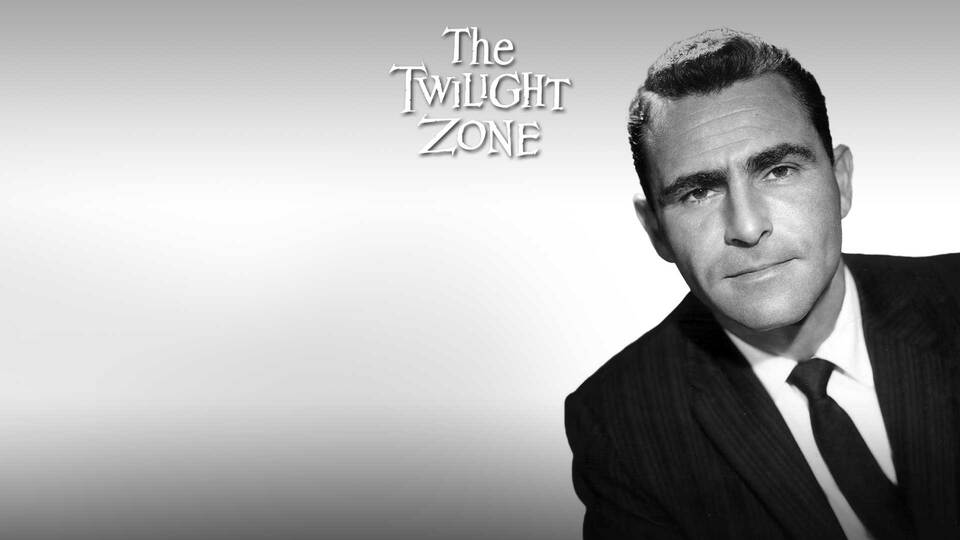
"There is nothing in the dark that isn't there when the lights are on." – A review of The Twilight Zone.
"Sorry, am I in the twilight zone" is one of my favourite things to say when one of my friends says something completely unhinged – which is something that happens more often than you'd believe and more often than I'd like. The Twilight Zone, which came out in 1959, was a mystery sci fi show full of imagination and social commentary, which invites viewers into a completely bizarre reality where nothing is ever quite what it seems to be – yep, this about sums up my friendship group.
The Twilight Zone is an anthology, with each episode being a self-contained story. These episodes often begin in an unassuming manner before becoming completely surreal or supernatural, challenging characters—and viewers—to question the boundaries of reality, morality, and fate. The format means the show is able to cross genres, so you never know if you're going to get sci fi, dark fantasy or even psychological horror, keeping the show exciting.
The series explores tonnes of themes, and several of them are still relevant today. These include the dangers of conformity, fate, unchecked technology (if the show was on today, I imagine there would be a lot about AI), and the consequences of prejudice and fear. The Twilight Zone does a great job at holding up a mirror to society, encouraging reflection on the choices we make and the world we inhabit.
There are so many memorable episodes, but standouts include "Time Enough at Last", a sad story of isolation and irony, "Nightmare at 20,000 Feet", which was full of suspense and paranoia, and "Eye of the Beholder", a critique of beauty standards and societal acceptance. These aren't the only episodes I'd describe as iconic, but they are frequently referenced and parodied in popular culture.
The Twilight Zone has earned widespread acclaim, earning Emmy Awards and a Peabody Award during its original run. Critics praised the series for its intelligent writing, thought-provoking narratives, and enduring influence on the science fiction and horror genres. I think it's fair to say that the show set the standard for anthology storytelling on television.
Rod Serling was an incredible narrator; his dramatic narration and on-screen introductions became a hallmark of the series. Serling's insightful commentary, delivered with gravitas and wit, not only set the mood but also underscored the moral or philosophical questions at the heart of each episode. It was always so dramatic and over the top, which I absolutely loved.
Decades after its original broadcast, The Twilight Zone remains a beloved and influential masterpiece. It challenges, entertains, and provokes thought, meaning that much like the mysterious dimension it depicts, the series will never truly fade away. For television enthusiasts and newcomers alike, the journey into The Twilight Zone is always worth revisiting.
Written by Tam Page
About
I'm Mr. Tomney… and I'm from the United Kingdom (UK), where I create amazing websites and applications. I'm currently a freelance web designer and developer with a great passion for building things with code…
No comments yet.
Leave a Reply
Your email address will not be published. Required fields are marked *
Comments: